


Responsible Gambling — Tools, Limits & Support

Responsible gambling means keeping control over how often you bet, how much you stake, and how much time you spend on it. For sports bettors, that control matters in specific ways. Live betting moves fast, accumulators tempt you to chase a bigger return, and following your favourite team can make a bet feel personal.
This guide is here to help, not to lecture. Most people bet without any harm, and staying in control is a normal part of enjoying sport, not a sign that something is wrong. The aim is simply to arm you with the practical knowledge before you need it.
Across the sections below, we cover the tools that licensed sportsbooks provide, how to set limits, how self-exclusion works, the warning signs worth knowing, where to find support, and the rights you have as a player. Licensed operators are required to offer player protection tools, and this guide explains how to use them.
- What Is Responsible Gambling?
- Responsible Gambling Tools at Licensed Sportsbooks
- How to Set Limits
- Self-Exclusion & Cool-Off Periods
- Warning Signs of Problem Gambling
- Warning Signs of Problem Gambling
- Responsible Gambling Support Organisations
- Player Rights & Operator Obligations
- Budgeting & Safer Play Tips
- Frequently Asked Questions
- Conclusion
What Is Responsible Gambling?
Put simply, responsible gambling means treating betting as entertainment that you pay for, within limits you set in advance and with a clear understanding of the risk involved. The outcome of any bet is uncertain, and responsible betting accepts that from the start. It is not about how much you bet, but about staying in control of the decision.
Sports betting carries its own pressures. Odds shift in real time, in-play markets reward fast decisions, and the emotional pull of a match can nudge you towards bets you would not place with a cool head. These features make sports betting engaging, and they are also the reason why having a plan matters. None of this means the activity is dangerous by default, only that it rewards a considered approach.
This is where safer gambling tools come in. Licensed operators are required to provide them, and the bettors who benefit most tend to use them early, before any difficulty arises, rather than as a reaction to a problem.
It also helps to be clear about the difference between recreational betting and problem gambling. The large majority of people bet for fun and stay within their means. For a smaller number, betting becomes harder to control. Knowing the difference is a tool, not a stigma, and awareness costs nothing.
Responsible Gambling Tools at Licensed Sportsbooks
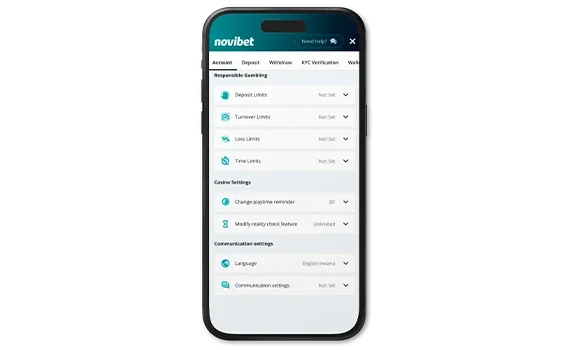
Licensed sportsbooks are required to give you a set of gambling limits and safer controls for managing how much you bet and how long you spend doing it. You will usually find them grouped under a responsible gambling or safer gambling menu, often within account settings. Here is what each one does and where it sits.
|
Tool |
What it does |
Where you find it |
|
Deposit limits |
Cap how much you can pay in over a day, week, or month |
Responsible gambling menu or account settings |
|
Loss limits |
Cap how much you can lose in a set period, separate from deposits |
Responsible gambling menu or account settings
|
|
Stake limits |
Cap the maximum size of a single bet on an event or market |
Responsible gambling menu or account settings
|
|
Session time limits |
Warn you or end a session when a set login time is reached |
Responsible gambling menu |
|
Reality checks |
On-screen prompts showing time spent and amount wagered |
Appear automatically during play |
|
Activity history |
A full record of your deposits, bets, and outcomes |
Account section |
|
Self-exclusion |
A longer, formal break from betting (covered in detail below) |
Responsible gambling menu or support |
Two points are worth knowing. First, deposit limits are the most common starting point, and setting betting deposit limits early is one of the simplest ways to stay in control. Second, all of these tools are built to work on mobile. Since most betting now happens on a phone, so you can set or adjust them wherever you are.
Because player protection is implemented better by some operators than others, comparing how each one handles these features is a practical way to identify a licensed operator with strong player protection, something the reviews of licensed sportsbooks set out in detail.
How to Set Limits
Setting limits is the most practical step on this page, and it takes only a few minutes. Knowing how to set betting limits before you start is far more effective than reacting after a heavy loss. The process is similar across most licensed sportsbooks.
- Open your account settings and find the responsible gambling or safer gambling menu.
- Choose the limit you want to set: deposit, loss, stake, or session time.
- Enter the amount and the period it applies to, such as per day, week, or month.
- Confirm the limit. A reduction usually takes effect straight away.
- To raise a limit later, expect a cooling-off period before the increase applies.
That last step is deliberate. Lowering a limit protects you immediately, while raising one is held back by a cooling-off period, a short delay that gives you time to reconsider an in-the-moment decision. The best practice is to set your sports betting limits before your first deposit, not after a loss, so the choice is made with a clear head. Limits are tied to your account rather than your device, so they follow you across the app and the website.
A simple habit worth keeping
Set your deposit limit the moment you open an account, while you are calm and thinking clearly. It is far easier than making that decision in the middle of a losing run, and you can always lower it further whenever you want to.
Self-Exclusion & Cool-Off Periods
Sometimes limits are not enough, and a complete break is the better option. Gambling self-exclusion lets you close off access to betting for a set period. It is a normal, practical tool, not a last resort or a sign of failure.
It differs from a simple account pause. A pause is a short, informal break you can lift yourself, while self-exclusion is a formal commitment the operator is obliged to honour.
Knowing how to self-exclude from sports betting is straightforward. You usually request it through the responsible gambling menu in your account, or by contacting customer support. Durations tend to fall into two groups:

Short-Term
24 hours to 30 days, often reversible if you change your mind
Long-Term
6 months, 1 year, or permanent, usually not reversible before the agreed end date
Some markets also run multi-operator schemes that block access across many sites at once. GAMSTOP in the UK is one well-known example, though similar schemes are not available everywhere. Whatever route you take, self-exclusion requests are handled privately and confidentially. Many operators can also start the exclusion immediately, so there is no waiting period before it takes effect. It is worth considering when limits alone are not keeping your betting where you want it.
Warning Signs of Problem Gambling
Recognising the signs of problem gambling early makes them far easier to address. These patterns often develop gradually, and noticing them is not a judgement on character. It is simply useful awareness.
- Betting more than you planned, or chasing losses to win them back
- Spending an increasing amount of time thinking about or planning bets
- Letting work, relationships, or other responsibilities slide because of betting
- Borrowing money, or using funds meant for other things, to keep betting
- Feeling anxious, irritable, or restless when you are not betting
- Continuing to bet even though you want to stop
- Hiding your betting from people close to you.
None of these signs on its own means there is a serious issue, but several together are a useful prompt to take stock. Early recognition makes change much easier than waiting, and recognising them is part of preventing betting addiction before it takes hold. There is no threshold you have to reach before looking for problem gambling help.

Responsible Gambling Support Organisations
If you want to talk to someone, a number of established responsible gambling organisations offer free, confidential help with no referral needed. The services below are recognised internationally, and many countries also run their own national helplines.
|
Organisation |
Region |
Contact / resource |
 GamCare GamCare |
United Kingdom |
gamcare.org.uk, Helpline: 0808 8020 133 (free, 24/7) |
 BeGambleAware BeGambleAware |
United Kingdom |
begambleaware.org, free chat and support resources |
 Gamblers Anonymous Gamblers Anonymous |
International |
gamblersanonymous.org, peer support groups worldwide |
 National Council on Problem Gambling National Council on Problem Gambling |
United States |
ncpgambling.org, Helpline: 1-800-697-3738 |
 Gordon Moody Gordon Moody |
United Kingdom |
gordonmoody.org.uk, residential and online treatment |
 Your national helpline Your national helpline |
All markets |
Search for the gambling support helpline in your country |
GamCareRegion
United Kingdom
Contact / resource
gamcare.org.uk, Helpline: 0808 8020 133 (free, 24/7)
BeGambleAwareRegion
United Kingdom
Contact / resource
begambleaware.org, free chat and support resources
Gamblers AnonymousRegion
International
Contact / resource
gamblersanonymous.org, peer support groups worldwide
National Council on Problem GamblingRegion
United States
Contact / resource
ncpgambling.org, Helpline: 1-800-697-3738
Gordon MoodyRegion
United Kingdom
Contact / resource
gordonmoody.org.uk, residential and online treatment
Your national helplineRegion
All markets
Contact / resource
Search for the gambling support helpline in your country
Reaching out to any of these is a practical first step, not an admission that something is seriously wrong. They all offer free and confidential gambling support. If your country is not listed, a quick search for a local service will usually point you to the nearest equivalent. Most offer several ways to get in touch, including phone, live chat, and online resources, so you can choose whatever feels most comfortable.
Player Rights & Operator Obligations
Licensed operators carry obligations designed to protect you. Wherever you bet, a reputable licensed sportsbook should respect a baseline set of rights.
- The right to set and adjust responsible gambling limits at any time
- The right to request self-exclusion and have it honoured without delay
- The right to a full history of your betting activity and account transactions
- Protection from marketing contact during a self-exclusion period
- The right to escalate a complaint to the relevant licensing authority if an operator fails to honour a limit or self-exclusion request
- Age verification before any betting, since licensed operators must confirm every user is of legal age.
These are baseline expectations rather than a full legal guide, since entitlements vary by jurisdiction. Knowing them is part of safe betting, and gives you a clear route to act if something is not handled properly.
Budgeting & Safer Play Tips
A few simple habits keep betting comfortably within your means. These are the same practical routines experienced bettors use, not warnings aimed at anyone in particular.
- Set a fixed betting budget before the season, month, or week begins - an amount you are comfortable losing in full
- Keep your betting funds separate from money you use for everyday spending
- Step away after a bad run rather than trying to win it back immediately
- Take a break after a big win or a heavy loss, when judgement is least reliable
- Avoid funding bets with credit or borrowed money
- Treat in-play and live betting with extra care, since decisions there are made quickly
- Use your account history to compare what you spent against what you planned.
None of this is complicated, and that is the point. Small, consistent habits do more to keep betting enjoyable than any single rule.

Frequently Asked Questions
Below are some brief answers to the questions sports bettors ask most often about staying in control.
Can I set responsible gambling limits at any licensed sportsbook?
Yes, in most cases. Licensed operators are generally required to provide deposit, loss, and session limits, though the exact options can vary by jurisdiction. Reputable sportsbooks make them easy to find in your account.
How does self-exclusion work?
You request it through your account or customer support, and it applies to that operator. Multi-operator schemes, such as GAMSTOP in the UK, can cover several sites at once where they are available.
Is responsible gambling support confidential?
Yes. Both the tools inside a sportsbook and the external support organisations treat your requests in full confidence.
How do I know if I need help?
The warning signs above are a useful guide. If several apply to you, a confidential conversation with GamCare or a local helpline can help you take stock.
What if someone I know has a gambling problem?
This is common and difficult. GamCare and Gamblers Anonymous both offer guidance for friends and family, not only for the person betting.
Can a sportsbook refuse my self-exclusion request?
No. A licensed operator must process a valid self-exclusion request. If one does not, you can escalate the matter to the relevant licensing authority.
Conclusion
Responsible gambling tools exist to support you, not to limit your enjoyment, and using them is simply good betting practice. Setting limits, reviewing your account history, and knowing where to turn for help all add up to a steadier, healthier approach to sport.
If you ever feel your betting is slipping out of control, free and confidential help is available, and reaching for it early is never a bad decision. None of these steps signals a problem; together they are just what staying in control looks like.
That focus on transparency and player protection is one we carry through everything at BettingTop10, well beyond this page.